
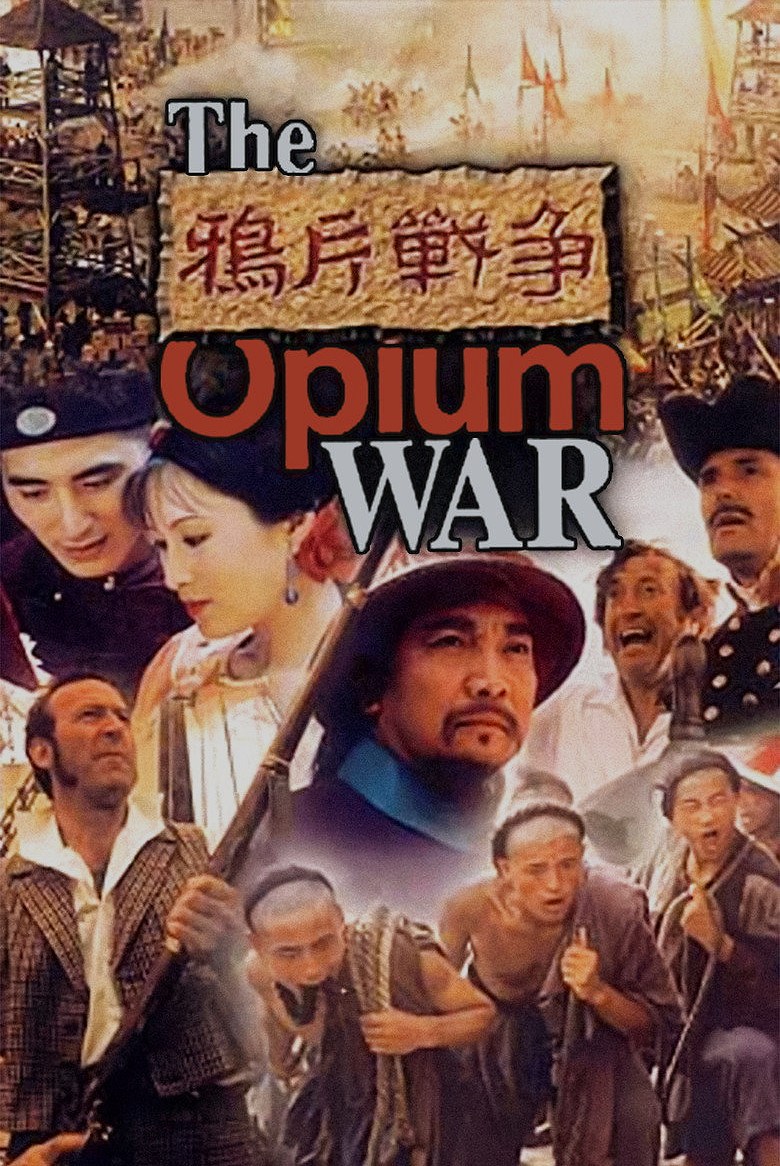
In 1997, the year Hong Kong was returned to China, the film Opium War was released to trace the origins of the tragedy that led to the loss of the territory. Directed by the experienced Xie Jin and starring Bao Guo-an as Lin Zexu, the courageous official who tried to suppress the opium trade, leading to the First Opium War and ultimately the cession of Hong Kong to Britain. The film is not only a history lesson but also reflects the pain of a nation oppressed by Western powers.
Plot Summary (No Spoilers)
The story begins in 1838. The Qing Dynasty is facing a crisis from the opium trade spread by British merchants. Emperor Daoguang (played by Min Su) appoints Lin Zexu as Imperial Commissioner of Guangdong and Guangxi to suppress the opium trade. Lin Zexu takes decisive measures, forcing foreign merchants to surrender all opium and then burning it on the beaches of Guangdong. This action enrages Britain, which sees it as a violation of trade rights and interests. Britain sends a naval fleet to the Chinese coast, leading to a war that China cannot resist. The film unfolds through multiple characters, both Chinese trying to preserve honor and British seeking profit, with key scenes including the armistice negotiations and the signing of the Treaty of Nanjing, which cedes Hong Kong to Britain.
Acting and Characters
Bao Guo-an powerfully portrays Lin Zexu, conveying the determination and pain of an official torn between loyalty to his country and the reality that the Qing Dynasty is too weak. His performance allows the audience to see the inner conflict of a character who, though brave, must bow to the tide of history. Liankun Lin as Qishan, the official who compromises with the British, shows the complexity of a character seen as a traitor but who may simply recognize that China cannot win. Simon Williams as Charles Elliot portrays the arrogance of a colonialist who believes in his own cultural superiority. The performances of all actors give depth to the story, avoiding a simple black-and-white narrative.
Direction, Cinematography, and Music
Xie Jin directs with masterful skill, using vast and majestic imagery to depict the grandeur of the Qing court and the brutality of war. The opium burning scene is one of the most memorable, with detailed cinematography of smoke and fire, symbolizing futile resistance. Cinematography by Lu Yue uses muted tones to reflect the despair of the era. The score by Jin Fuzai blends traditional Chinese melodies with Western string instruments, creating a solemn and sorrowful atmosphere, especially in battle scenes where the music effectively enhances the emotion.
Editorial Analysis
Opium War is not a straightforward historical narrative; it questions the meaning of 'righteousness' and 'survival.' Lin Zexu, though hailed as a hero, his actions lead to national disaster. The film prompts viewers to think: if we could go back in time, would we choose to burn opium or surrender? Additionally, the film criticizes both the rigid Chinese side and the greedy British side through diverse characters. Some parts may feel lengthy, but that is due to the effort to include comprehensive historical details. For fans of Chinese history or those wanting to understand the roots of East-West conflict, this film is a worthwhile choice. If you are looking for a film that offers both entertainment and insight, try to find a chance to watch it. And if you are interested in more films of this genre, you might also look for subthai AV films with Chinese historical content.
Verdict
Opium War is a historical film worth watching for those interested in Chinese history and the Opium War. Despite its length and occasionally slow pacing, the intense performances and meticulous production make it engaging. Suitable for history buffs who want to understand China's pain during the colonial era.
Another option worth a look is หนังRซับไทยใหม่ล่าสุด.
👍 Pros
- +Powerful lead performance, especially Bao Guo-an as Lin Zexu
- +Excellent cinematography and music that create a great atmosphere
- +Rich content reflecting multiple perspectives on history
- +Spectacular war and opium burning scenes
👎 Cons
- −Length of 153 minutes may make some parts feel drawn out
- −British characters lack depth, appearing merely as villains
- −Some parts of the storytelling may feel slow for general audiences
Top Cast



FAQ
Yes, the film is based on the actual First Opium War (1839-1842), and the characters Lin Zexu and Qishan are historical figures.
Currently, it can be found on some streaming platforms that offer classic Chinese films, or purchased on DVD.
There is only one film, with a runtime of 153 minutes.
Directed by Xie Jin, a renowned Chinese director known for works like The Legend of Tianyun Mountain and The Herdsman.


